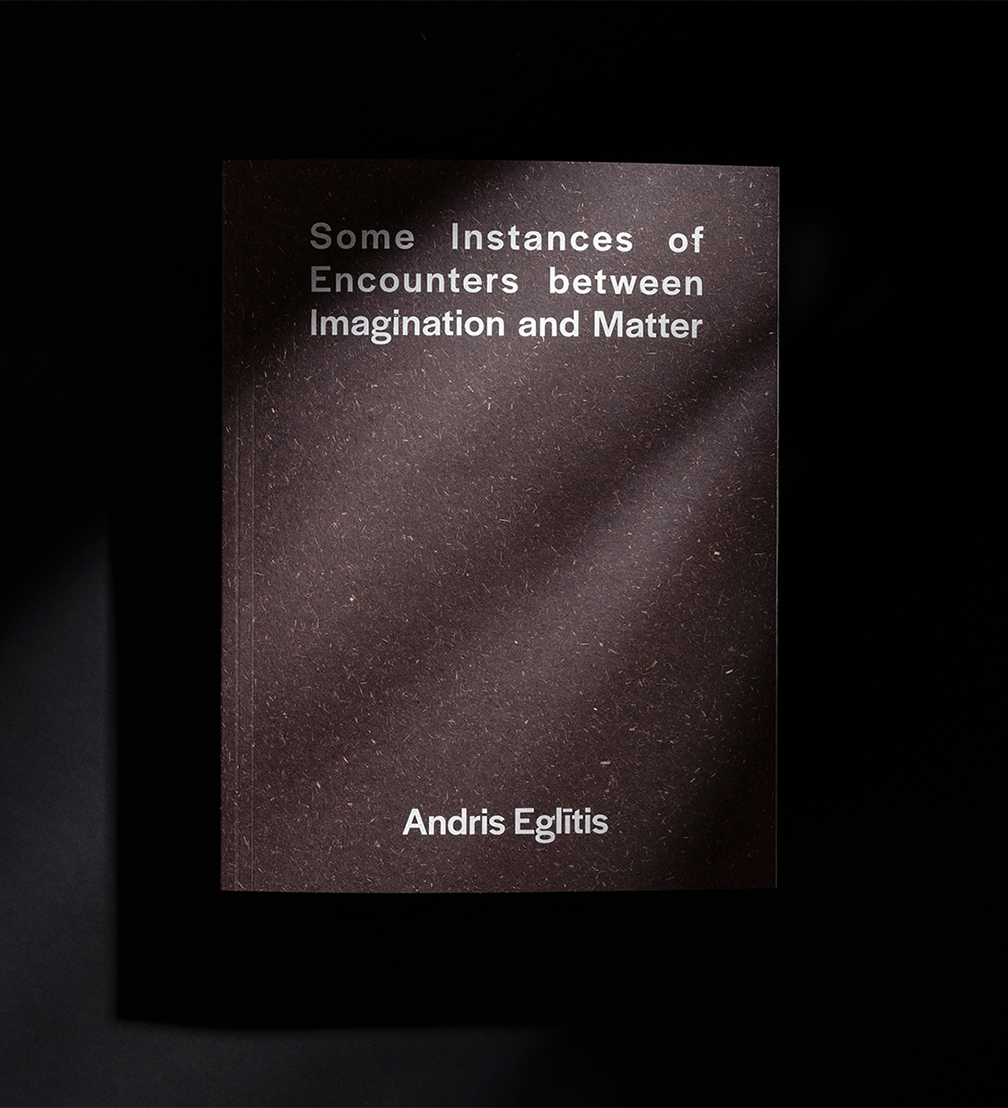
At the end of last year, Swedish art publisher Arvinius + Orfeus Publishing released a book, Some Instances of Encounters Between Imagination and Matter, dedicated to the work of artist Andris Eglītis, with a focus on the 2024 exhibition at the Latvian National Museum of Art. Originally conceived as an exhibition catalogue, the publication has been created as an independent creative work, developed in close collaboration between the artist, photographer Reinis Hofmanis, designer Una Grants, and the writers.
Andris Eglītis says that the idea to publish the catalogue for Exhibition. Some Instances of Encounters between Imagination and Matter came shortly before its opening. Initially, the goal was to complete the catalogue in time for the last day of the exhibition, but this proved impossible. Consequently, the question arose about the book as a separate, independently valuable entity that would reach audiences outside the context of the exhibition. Similar to Andris’ first book, Pale Chopped-off Parallelogram, the new publication also provides insight into the artist’s practice. «Unlike an exhibition, the book format allows me to show the process and give a broader perspective on it. At least so far, I haven’t been able to find a good way to include documentation of the process in an exhibition,» explains Andris.
The decision to create the book as a self-contained entity allowed for collaboration with an experienced foreign art publisher to help reach an international audience. The publication was created as a separate creative work, and the contribution and collaboration of all the authors was essential to its final form. «I trust the people I have invited to be co-authors of the book. Una Grants is responsible for the design, Reinis Hofmanis for the photographs, and Agnese Krivade for the text. It is important for me to allow them to realise their wishes and ideas, rather than dictating my own rules,» says Andris.
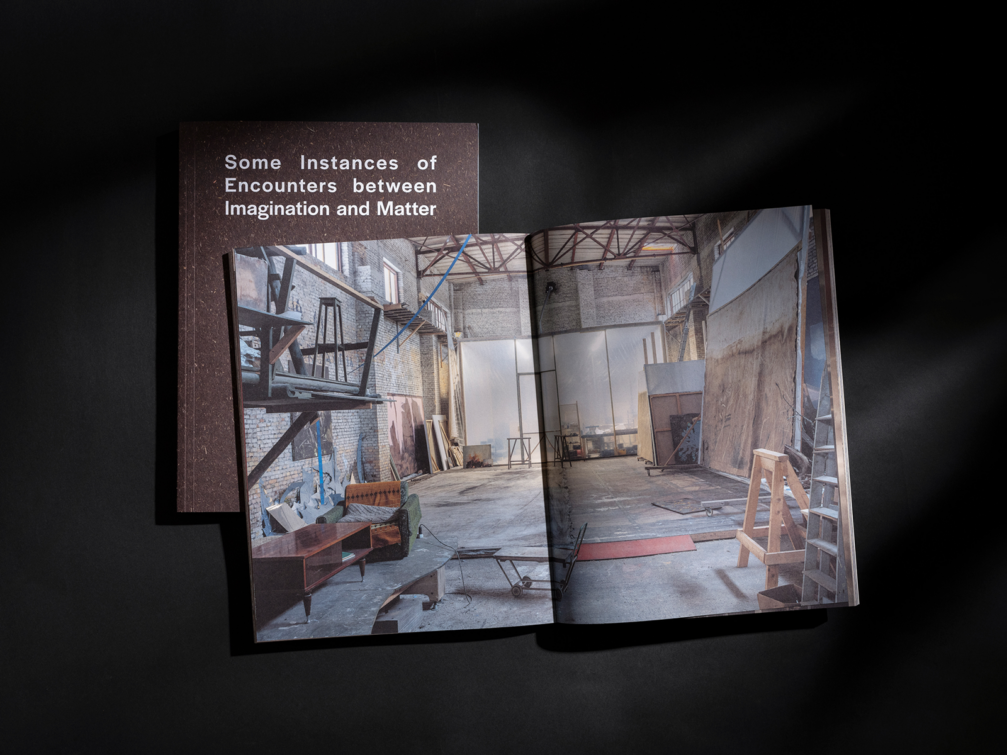
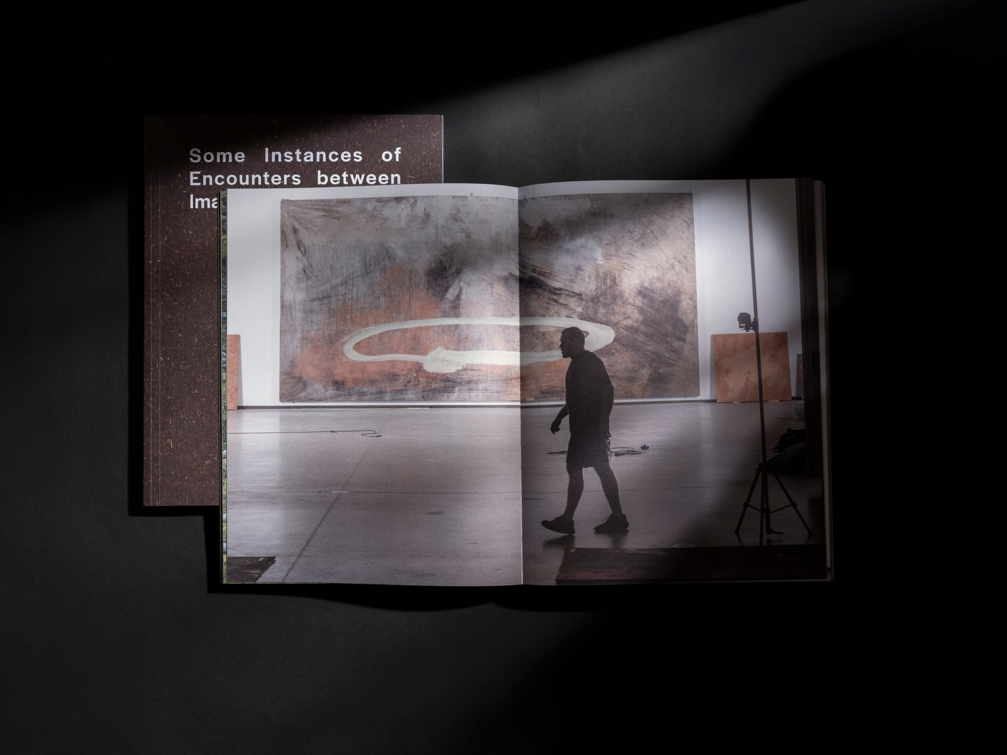
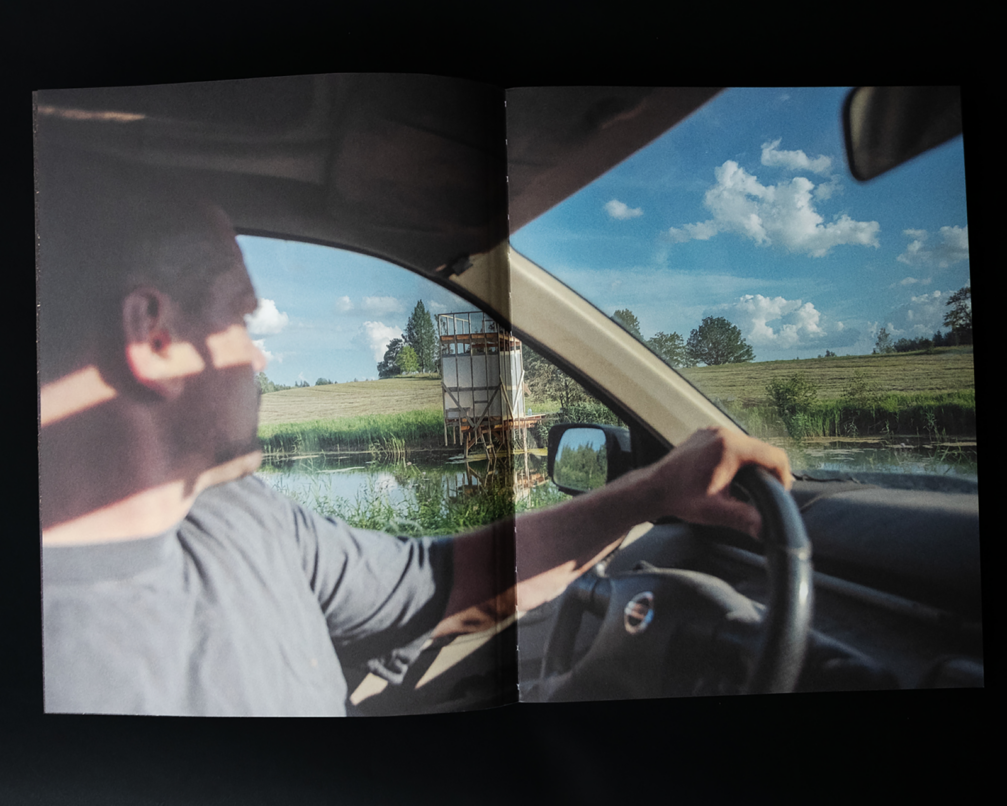
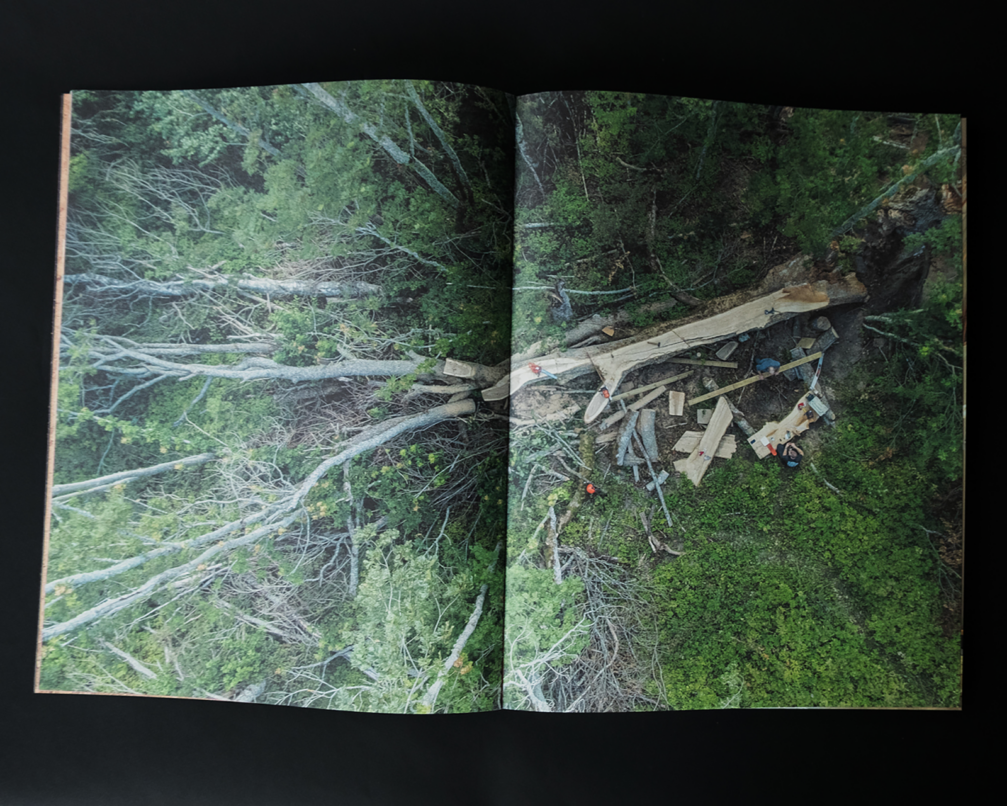
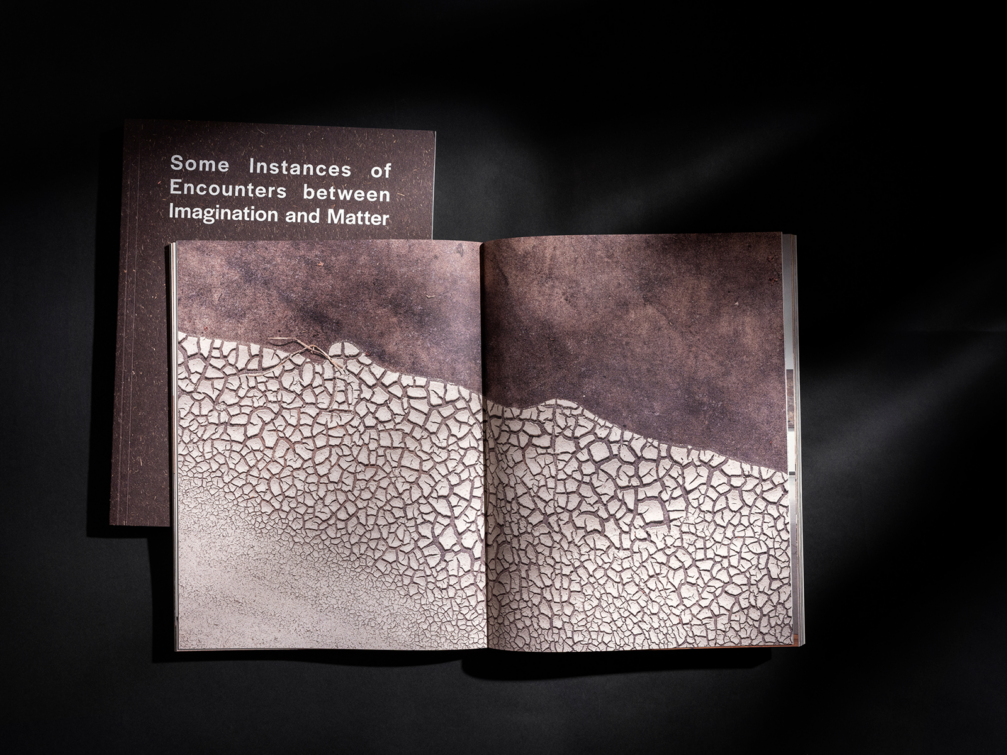
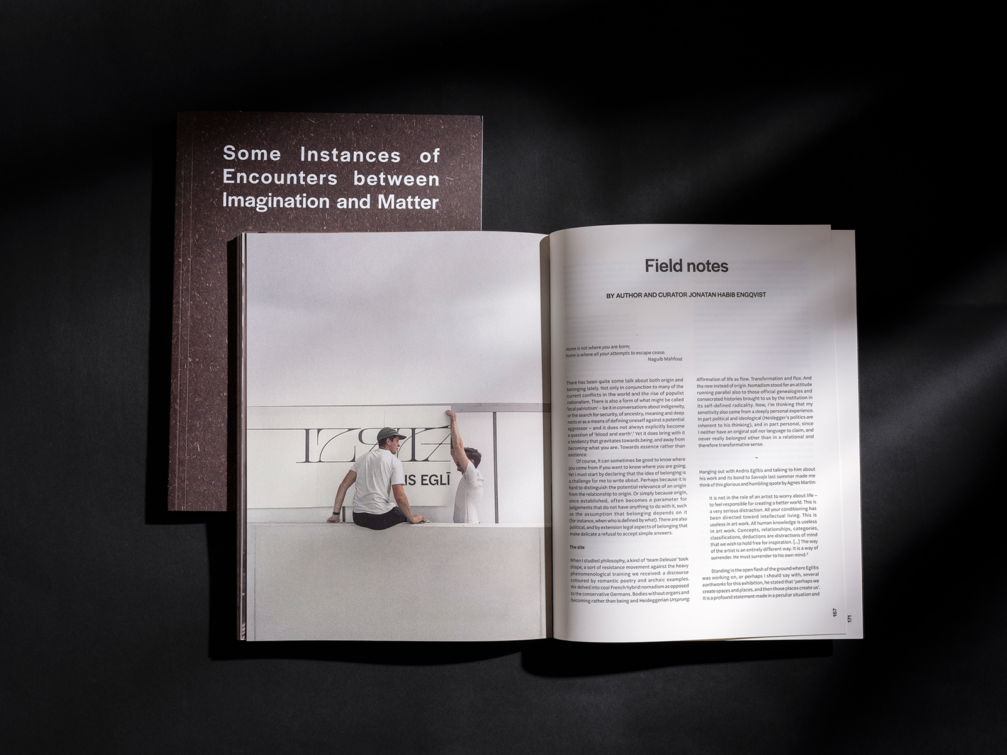
The book mainly consists of photographs taken by Reinis, capturing both the exhibition and the artist’s creative process at the Savvaļa (Savage) open-air art space and his studios in Riga. Reinis says that initially he had no plans to publish photos in a book, and they were taken as part of his personal project. Later, the photographer was invited to capture the exhibition as well. Reinis’ photos in the book are complemented by some pictures taken on Andris’ phone that spontaneously capture the moment. «It is precisely the organic narrative that intertwines the exhibition and the process of its creation that is the strongest quality of this book,» says Andris.
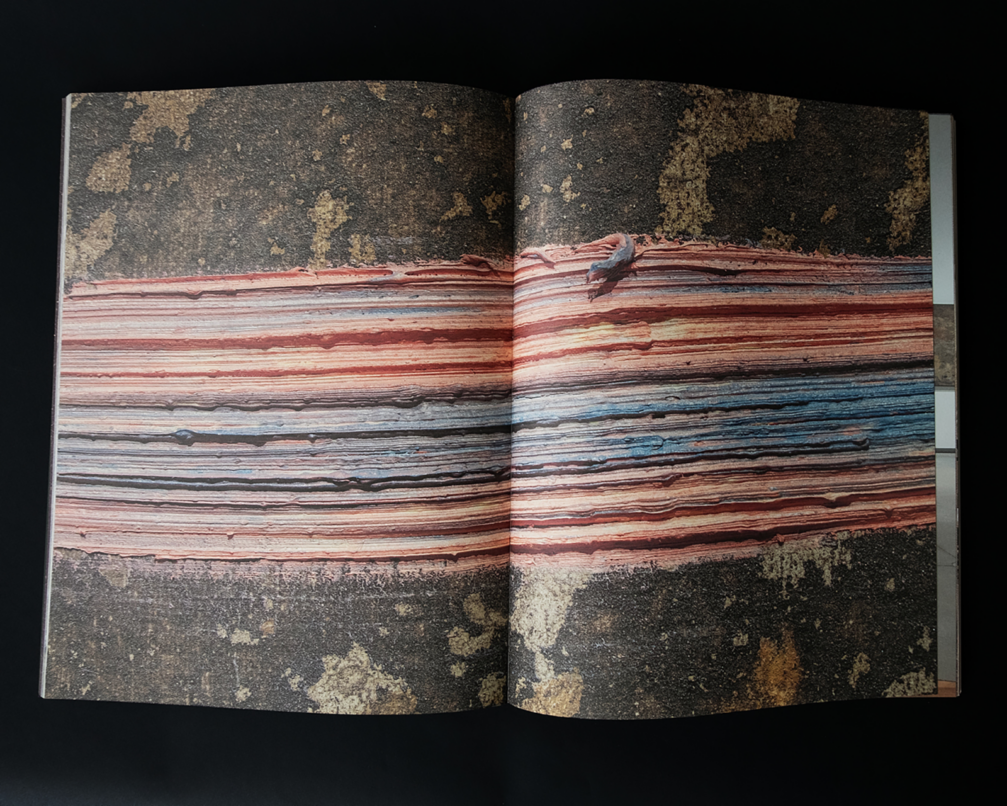
Reinis points out that most of the images included in the publication are not typical photographs that document the exhibition but rather speak to how «the space is inhabited». The experience of the exhibition is revealed in the publication, for example, through changes in scale — from landscapes in nature and the exhibition to textures in the artist’s works. Reinis selected the photos and compiled the first sequence, and its rhythm has remained unchanged since the initial version. However, the authors worked together for a long time on various nuances. «It’s like watching a movie!» says designer Una Grants, describing the book.
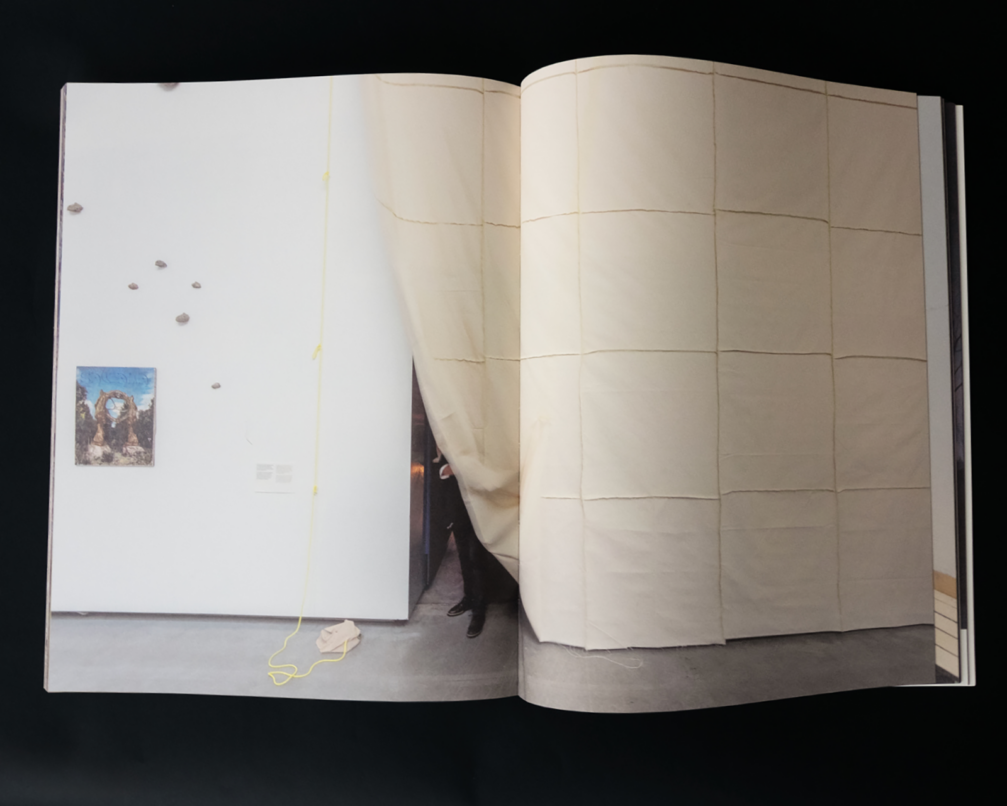
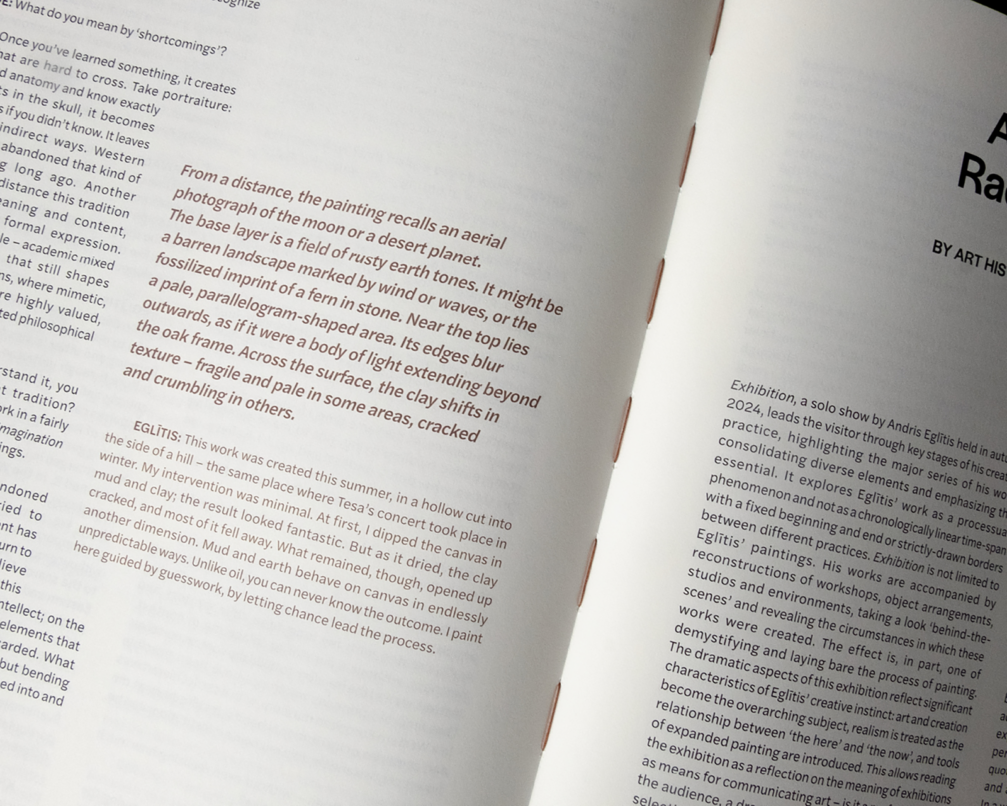
The photographs in the publication are accompanied by essays by art historian Santa Hirša and Swedish curator Jonathan Habib Engqvist, as well as a conversation between poet Agnese Krivade and Andris. As the book is aimed at the international market, its main language is English, but Andris felt that «out of respect and love for the Latvian language» it was important to include the texts in Latvian as well. Since producing a bilingual book would have made it considerably more expensive to publish, other solutions were sought. Designer Una suggested adding the Latvian text to the publication in a separate booklet, sewn together with neon yellow thread, borrowing the idea from Liene Pavlovska’s solution in exhibition scenography. Each of the booklets was sewn together by Una by hand.
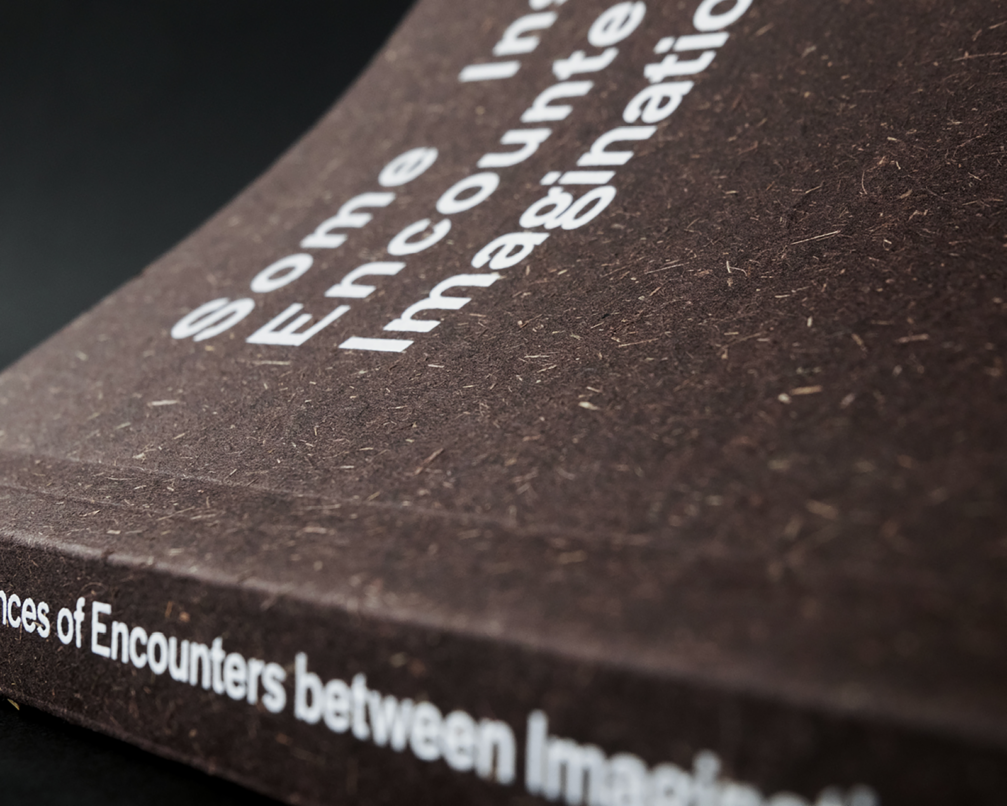
The book cover uses Gmund’s Soil paper from the sustainable Mother Earth series. At least half of its mass consists of natural plant fibres. «It smells like nature and resonates with the tactility that characterises Eglītis’ works. At the same time, the chosen paper continues the exhibition’s concept of responsible use of materials,» explains Una. The book design also uses the same font as the exhibition — Halyard Text.
The publication has already been launched in Latvia, but its international launch will take place on March 5 at the Index art centre in Stockholm. The publication is available at Arvinius + Orfeus Publishing and Neputns. The book was printed and bound at the Jelgavas Tipogrāfija, and its creation was supported by the State Culture Capital Foundation.
Viedokļi