
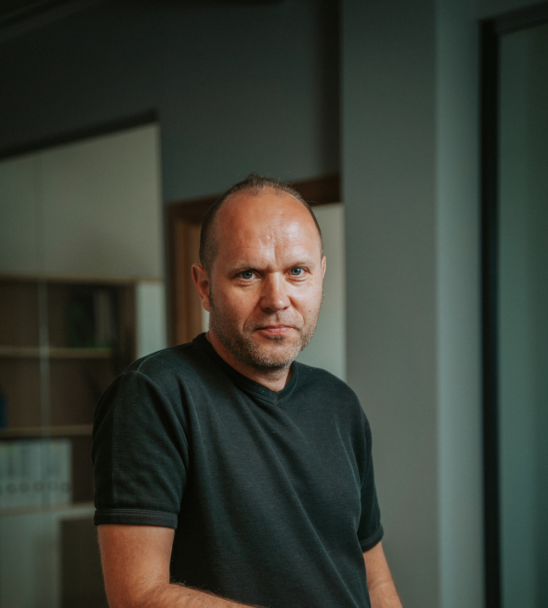
David Sim is a renowned urban planner and architect, best known for his work with Gehl Architects in Copenhagen, where he has championed human-centred urban design for over two decades. His influential book Soft City presents a compelling vision for cities that prioritise comfort, connection, and liveability through thoughtful, small-scale design.
Rather than relying on high-tech solutions, Sim advocates for softer approaches — walkable neighbourhoods, diverse building types, and spaces that foster community and well-being. Recently, Soft City was translated into Latvian, marking a significant moment for urban planning discourse in the region.
You are an architect, educator, and urban planner, but I’d like to scratch beneath the surface and ask what values and meaning lie behind your work — what is the driving force of your professional life?
More and more, I think of myself as a student of life. I come from a family with working-class roots but a huge respect for education, and my sister and I were the first in our family to go to university. Normally, if you are the first generation to get a higher education, there’s pressure to do something serious and make big money. But my parents thought that it was very important to do what I wanted to do, to follow my heart.
I decided I wanted to be an architect already as a five-year-old child playing with Lego, but I learned very quickly that architecture education was actually a bit pretentious, because it was very much about the formal object, not so much the cultural context and life. My sense of purpose was tied to the life of the city rather than the detailing of buildings. So after getting into architecture school, I was ready to give up after just one year.
Then I met Jan Gehl. I followed a series of his lectures — he was really funny yet very relevant, making observations about the built environment and touching upon the irony of everyday life. He named things I had experienced but hadn’t formulated, and I became very fascinated by Jan’s storytelling and approach to everyday life. Eventually, I went to study in Sweden, possibly the first Erasmus student in Sweden, and I really loved it. At that time, Sweden was way ahead with ecology and the environment.
After I finished my education, I started a PhD, which was never finished, but I did start to think of some theories, like this theory of density, diversity, and proximity. If you are doing a PhD, you have to teach, and I loved teaching. I guess I got a kind of a second education there, teaching architecture in Lund. Working with students trained me to formulate myself very fast, which was useful later in my professional life.
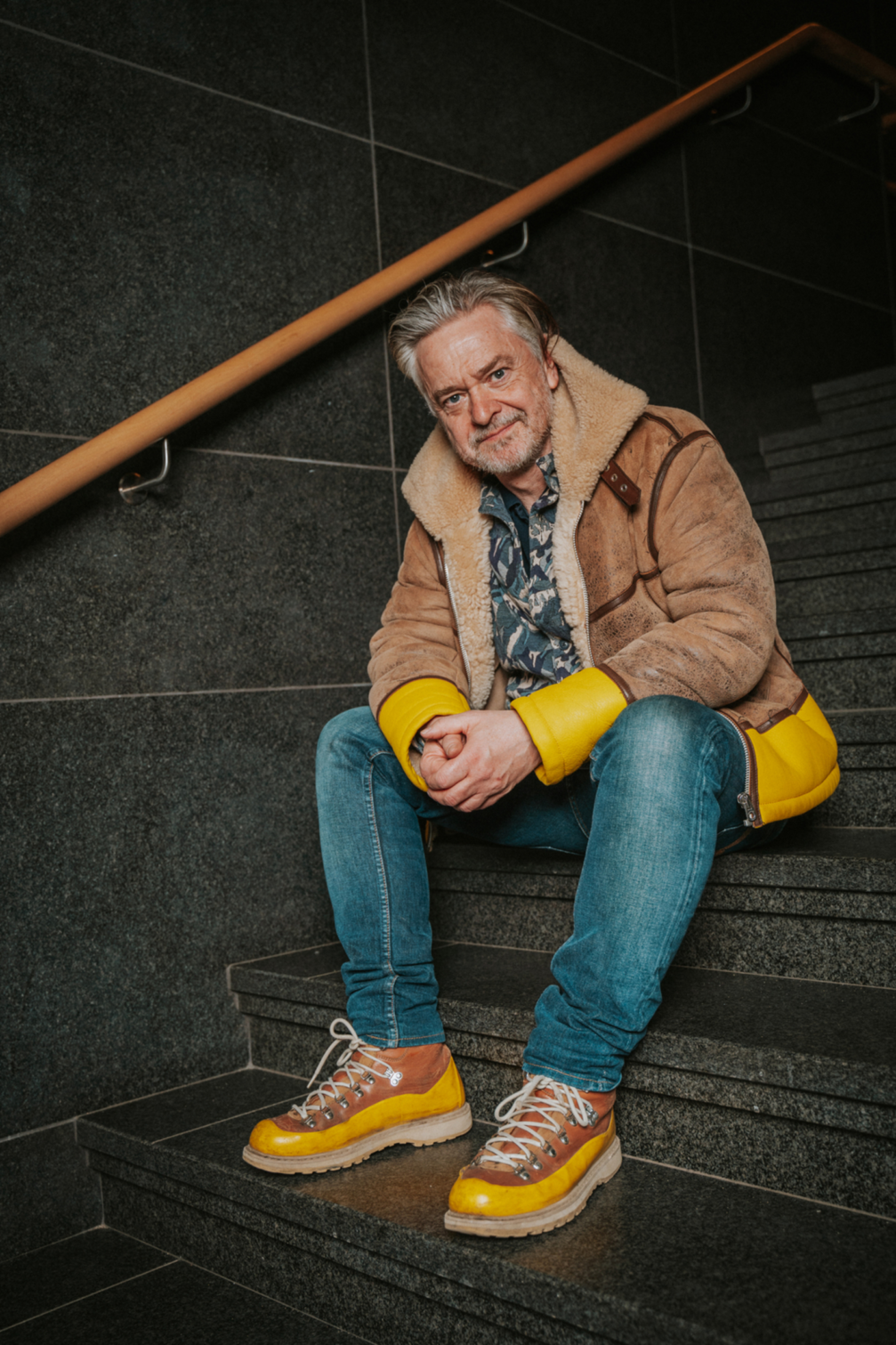
When you started working with Jan Gehl?
I was at Gehl’s office in Copenhagen for 17 years, doing something between theory, serving, communicating, and design. When we started, we were four people in an attic, and when I left, we were 80, with offices in New York and San Francisco. We really grew; I got the opportunity to travel the whole world. Getting thrown into different environments was really eye-opening, because I discovered that wherever you go — a city in Japan, Australian suburbs, or a favela in Mexico — people are the same, they have surprisingly similar aspirations — they just want a decent life for themselves and a better one for their kids.
How did your book come about?
Towards the end of the period at Gehl, there was an opportunity to get some research money to make a book, and I had this old PhD thesis. I had been collecting examples of this core idea for 20 years, and I thought I could put something together. That first draft ended up being three times longer than this, because it contained everything I had ever thought about.
Lots of good stuff didn’t make it into the book, for example, there was a small piece about public toilets, because toilets are actually very important infrastructure. There is a project in Germany called Nette Toilette (Nice Toilets). There are small towns where there are no real public toilets, so they have a system where shops and offices have a sticker in the window which says Nette Toilette, meaning their toilet is open to the public, while the owners get some tax concession from the city. Turns out it works great, because 99.9% of people behave perfectly and are really grateful. They even buy something in the shop or go into a shop they wouldn’t have otherwise gone to. And all it takes is just a sticker in the window. Architects always want to have a bigger budget and a bigger project, but maybe all you need is a sticker. Sometimes we have to think of the biggest change we can make with the smallest resources.
It’s a great example of softness. These creative solutions to spatial problems are actually often outside of the scope of an architect or an urban planner. Whose domain is it? Or do we need to expand the fields of architecture and urban planning to include these kinds of interventions?
Well, do you really need to be an architect to be an urbanist? Architecture and design are only a small part of what goes into making a city. Lately, I’ve been meeting a lot of geographers and starting to think that maybe a geography education is more appropriate.
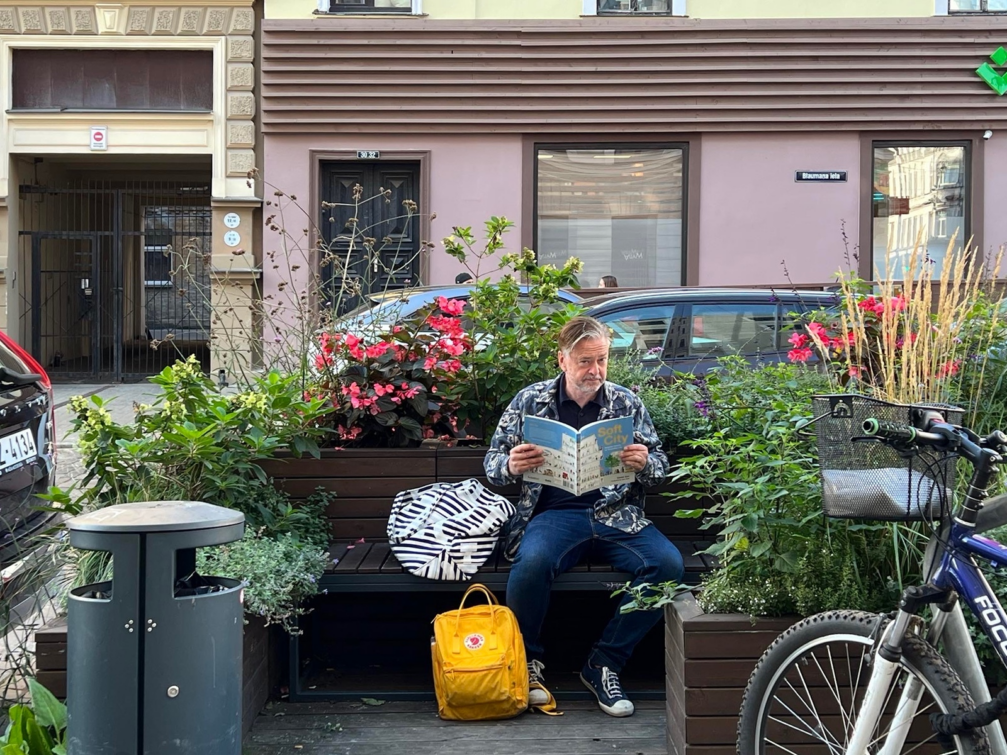
In Latvia, spatial planners are predominantly from geography backgrounds, rather than architecture.
That’s really interesting, maybe a lesson for the rest of Europe — we need people who understand the weather and geology, some basic economics, and how places work, and that’s actually more important than knowing what shape to make. In a sense, everybody is an expert in the built environment, because we all use it and know what works and what doesn’t.
When I do workshops with city officials and experts from different fields, I always say — remember, you are also human beings. You might be here because you are an economist or an engineer with a professional obligation to do your job, but you are also a human being who uses the city. One of the avenues to remind people of this is to ask them where they went on holiday and why they liked it. People always go on holiday somewhere nice and often end up describing green, walkable, human-scale places — like their home cities might be too
The ideas we are talking about — walkable cities, humane streets — are quite old. Jane Jacobs wrote her masterpiece in 1961; Jan Gehl was talking about this in 1971. It seems like there is resistance to these ideas, and if there is, why and who is doing the resisting?
I think we might be living on the edge of very dark times. These days, we are always reading things like «36 companies are responsible for 90% of the pollution of the planet» or «1% of richest people own half of everything».
Let’s look at it like this — which are the two most famous cities for cycling?
Amsterdam and Copenhagen.
What do the Netherlands and Denmark have in common?
Socialism?
Yes, that too, but they also don’t have a car industry that would influence their politics, unlike Germany or Sweden. They didn’t have anything to protect or to lose, only to gain. Copenhagen has calculated that for every kilometre the citizens cycle, the city makes a profit of something like 5 kroner, but for every kilometre driven by car, it loses something like 5 kroner. It’s calculated based on pollution and accidents, longer-term health benefits, and the need to maintain the expensive road infrastructure. At some point, we have to start analysing the big things — the influence of industry and capitalism. But I also think that there’s a next level of petit bourgeois small capitalism which really benefits from the stuff we are talking about — the small shops next to bike lanes, the small enterprises that can really thrive in a more human-scale place. I think that might be the topic of my next book — soft economics, thinking about different ways how the economics of a city might work.

There’s only that much you can achieve through design, even through soft design. I find that the big capital influencing our cities creates a very uniform built environment with no diversity.
Yes, and there’s the added layer of anonymity on top of that. Traditional capitalists were the ones who built the factory. They built a very beautiful factory because they lived in town, and they built their house two hundred metres from it, and their kids walked past it. They were close to what was happening in their business, and there was a kind of responsibility and loyalty about what they were doing. Of course, the world was far from perfect back then, but at least it was very local. Now capitalism is totally anonymous — we don’t know who owns what company, we don’t know where to turn if we’re angry about something a business is doing. One good thing about Tesla is that we know it’s Elon Musk; it’s one of the few examples where we can easily put a face on a product or a service, and we can choose to boycott or protest. But if I want to boycott, let’s say, Uber, I don’t even know who I’m hurting.
What is your view on diversity in the city? Is it possible to stimulate social diversity through urban planning?
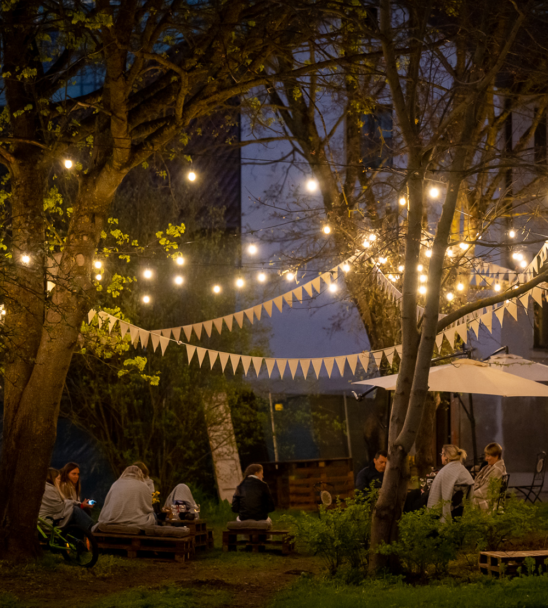
My sister lives in a rather posh district in Edinburgh, and everybody is a lawyer or a doctor or something. And if somebody’s car can’t start or if someone has a blocked toilet, nobody on this street has any idea of what to do. At the same time, there are other streets in Edinburgh filled with plumbers and carpenters, and when they get a legal letter, they are completely clueless. We need each other; we need people who can do different things. Living in an apartment building with different kinds of people is actually such an advantage. Culturally, we have a huge problem, because if we spend time only with people like us, we start to hate everyone else, although in reality we are very similar and want the same things for our kids, but it’s hard to find a forum where differences can meet. A good courtyard can almost feel like a magical phenomenon when it serves as a shared place and allows different people to meet and form a common identity. We really need more of such access points.
When talking with Rigans about improving our city, let’s say, about creating good meeting places, I sometimes hear this feedback that the city should focus on fixing the basics before splurging on luxuries like urban gardens or parklets. I’ve even heard someone say that they don’t need any help in bettering their leisure hours, but they do need help in bettering their everyday life. It’s an argument I can’t disregard; what are your thoughts on such criticisms?
This is a really good point, and I can respect that. But I also think that quite often it’s the narrative surrounding this that is wrong — as if public spaces were only for Sunday afternoons, while people just want to get to work. We have to retell the story — how is the city trying to make getting to work more seamless, comfortable, and rewarding? How is a good public space influencing your everyday life? We are also at a time when people don’t respect experts anymore. We need to think about how to make knowledge and understanding more valuable again, how to explain better, how to communicate better, how to make the issues of public space recognisable to ordinary citizens so that people can feel that their own little fragment of knowledge fits into the bigger picture and it makes sense. Jan Gehl managed to do that when I first heard his lectures — I didn’t know everything, but I knew that some parts of what he was saying were true, because I had lived them. Urbanism is very much about becoming better at connecting — communicating in a way that our knowledge, our expertise, connects to other people’s everyday life experience.



Viedokļi